Should combat casualty care be considered a humanitarian service?
This question arose when I was retiring from clinical practice as a urologist. I was ending a career that started at Georgetown University Medical School in Washington, DC, in 1964. A colleague wondered whether this milestone might serve as an occasion for me to be considered for an upcoming humanitarian service medical award.
Admittedly, experience in the field of combat casualty care might not be considered by many as a humanitarian endeavor. However, I challenge anyone to offer a more impressive instance of humanitarian care than the lifesaving support provided by military doctors, nurses, medics, and other healthcare professionals to our severely wounded soldiers, sailors, Marines, and Air Force personnel. Military medical personnel serve heroically, often risking their own lives to provide this care to critically injured troops. Perhaps their sacrifices should not be limited to acknowledgment from military medical systems.
Witnessing the Cost of War
My introduction to combat casualty care began in 1968, with my internship at Walter Reed Army Medical Center in Washington, DC, which coincided with the massive Tet offensive during the Vietnam War. The combat was gruesome. Loss on the American side was more than 1,500 casualties.
At Walter Reed, we were halfway around the world, but because the US had air dominance, we were routinely receiving wounded soldiers in large numbers. These patients were being evacuated by air transport (air vac’d), often within less than a week of their injury. Many were seriously wounded, and not all of them survived. Walter Reed was the destination for many of the war wounded because the injured were transported to the medical center closest to their state-side family home. We were one of only three such centers east of the Mississippi.
Sometimes a more delayed transfer troop would arrive with foul-smelling green pus exuding from his leg cast. This was a bad sign—melioidosis, which is a serious infection caused by the bacterium Burkholderia pseudomallei (rare, but endemic to Southeast Asia). Other times, small, wiggling white worms (maggots) would be found crawling inside the cast. This was actually a good sign because maggots only ate dead or infected tissue, leaving the wound efficiently debrided.
A life-changing experience for me occurred late one night, when a planeload of newly arrived wounded soldiers were lined up in stretchers along the hallway. As an intern, it was my duty to expedite their admission and disposition. One patient, while stable, had sustained a significant cervical spine injury. The option for admission was between the orthopaedics and neurosurgery services. Residents from both services arrived and engaged in an exchange, arguing over whose turn it was to admit this patient.
In typical, albeit regrettable resident banter, one resident was telling the other that it was not their turn to take “this dump.” The patient was not awake, and I alone overheard the comment. However, the soldier’s family members were speeding there on the way from their home in Northern Virginia in order to be at the side of their badly wounded son. And it entered my mind then to hope that they would never hear their son referred to as a “dump.”
I thought to myself then, without ever realizing how it would later affect my life, that I also hoped that there might come a day when residents would argue for the privilege of providing their best care for those who, like this wounded young man, would be paying a grim price of defending our liberty.
Answering the Call to Serve
Years later, as a urologist on staff at Letterman Army Medical Center in San Francisco, California, I would periodically volunteer to serve, just short term for an occasional weekend, as an instructor at the tri-service Combat Casualty Care Course (C4) Task Force in San Antonio, Texas.
C4 students were young physicians, dentists, and other military healthcare professionals from across the country, coming from all services, 120 students at a time, every 2 weeks. They would be required to spend a week in the foothills of South Texas, living in small tents (“under canvas”) in squads of 12 students each, in order to simulate the hands-on care that would be expected of them, if they were ever called upon to provide frontline medical care in time of combat.
My role as a volunteer instructor was to spend only the first weekend with these C4 students, along with other volunteer instructors, and provide them with training in the Advanced Trauma Life Support® (ATLS®) course. They received this instruction at Fort Sam Houston in San Antonio, prior to heading out to the rough terrain of Camp Bullis, several miles to the north, for a field training experience.
During one of these sessions, I spent a while chatting with the commander of the operation, who happened to be a fellow urologist (Navy Captain Sam Steele Jr., MD). He told me it was time for him to turn over the reins to a new commander. In fact, US Department of Defense officials were right then deciding in Washington on a candidate. I asked him who he thought would do the best job. He surprised me by saying he thought it should be me. Dr. Steele strongly encouraged me to volunteer.
The idea certainly caught me by surprise. But my thoughts turned back to that wounded soldier on a gurney at Walter Reed. Arriving back home in San Francisco, my wife advised me that, if I really felt called, she would not want me to spend the rest of my life wondering what I had missed. With her support, we packed up, along with our six young kids and headed to the Lone Star State.
For 3 years, I was the commander of the C4 Task Force. Every 2 weeks, a new contingent of 120 students arrived. My first challenge was related to motivational speaking, specifically to connect with these students who were not enthusiastic about being pulled abruptly from their first-class medical centers during their training. My goal was to convince them, “You need to be here!”
Addressing all the students, but the physicians in particular, I reminded them that at the core of our profession is our lifetime commitment to trustworthiness. I also asked these students to imagine themselves one day serving at a combat support hospital.
“In this setting, a field ambulance pulls up, carrying a badly wounded soldier and his buddy. The companion soldier turns to you and says, ‘Please, doc, I know he doesn’t look like much right now, but he’s my buddy, and I promised him I would see that he gets good care. I’ve got to go back to the front now.’ With that, the soldier entrusts the care of his companion to you. The trust he places in you is a prize more greatly valued than any other. In this light, you are here now at C4 to learn more capably the combat medical skills you will need then.”
After that introduction, I would spend the remainder of the week with them at Camp Bullis. The students trained in field conditions with the temperature often ranging from boiling heat to frigid cold. At the end of the course, despite all the privations, the students would give us a standing ovation. They were especially impressed by the several active-duty Marines who each had served as a leader for one of the individual squads. While the students found field conditions challenging, these young Marines talked about how easy this duty was for them due to the real cots to lie on and canvas overhead.
Serving my tour as commander of the C4 Task Force was a major milestone in my life. Looking back, I am so grateful for that chance moment of inspiration that had captured my attention, standing beside the stretcher of a wounded troop at Walter Reed.
Humanitarian Heart of Military Medicine
Combat casualty care has richly earned the right to be considered eligible for humanitarian medicine awards, outside as well as within military medicine channels. A long history of selfless sacrifice on the battlefield underwrites current efforts to provide the best possible care to those most in need and to advance treatment standards, both in war and peacetime. Ongoing achievements exemplify award-worthy dedicated service on the part of many.
This personal testimony highlights justification for choosing a career in military medicine. I would strongly encourage all physicians and other healthcare professionals to seriously consider volunteering in a branch of our Armed Forces—either short term or as a career, either on active duty or reserve. Be ready, should the need arise, to serve those wounded in battle.
More broadly, whether in war or peace, in civilian or military service, all physicians have a unique opportunity to impact lives through their dedicated care. We should be eager to embrace opportunities to serve humanity selflessly, reflecting the highest ideals of our profession.
Looking back now, at the end of my medical career, I recall that transformative moment at a chance fork in my life’s path, when I chose the higher, less-traveled road. And that made all the difference. I would strongly encourage young medical personnel to be open in their professional lives to choosing an option outside of the ordinary.
Upholding the tradition of the dedicated combat medical heroes who have gone before us, honor your Hippocratic commitment to self-sacrificing care. Whether it be in a civilian or military capacity, be ever on the lookout for opportunities to serve others selflessly. Always be open, should a chance in your life ever arise, to take on the challenge.
You only have one life. Live it large.
Acknowledgment
The author would like to thank Colonel (Retired) Douglas W. Soderdahl, executive director/CEO of the WarDocs podcast, who provided helpful guidance in the preparation of the article.
Disclaimer
The thoughts and opinions expressed in this article are solely those of the author and do not necessarily reflect those of the ACS.
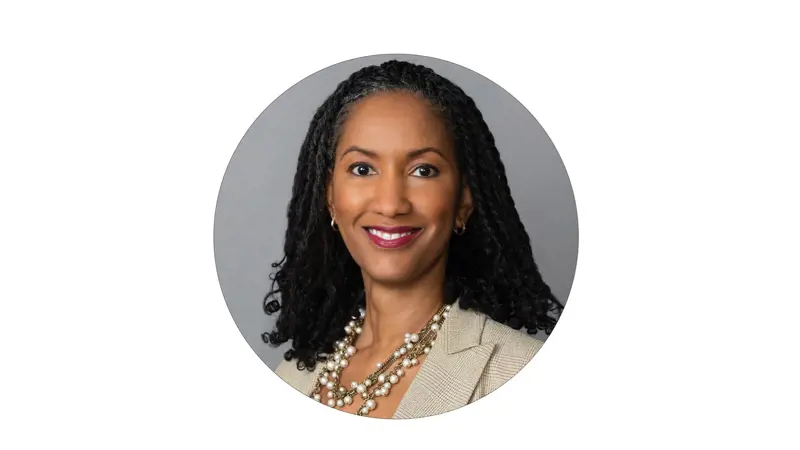
Dr. Richard Watson is the founding professor emeritus of urology at the Hackensack Meridian School of Medicine in New Jersey. Having completed his career as an Army urologist, he served most recently as a member of the Department of Urology at the Hackensack University Medical Center.