Become a member and receive career-enhancing benefits
Our top priority is providing value to members. Your Member Services team is here to ensure you maximize your ACS member benefits, participate in College activities, and engage with your ACS colleagues. It's all here.
Become a member and receive career-enhancing benefits
Our top priority is providing value to members. Your Member Services team is here to ensure you maximize your ACS member benefits, participate in College activities, and engage with your ACS colleagues. It's all here.
ACS Surgeons Train Syrian Teams During Liberation Day Mission
B. Hudson Berrey, MD, FACS, Michael J. Samotowka, MD, FACS, and Adam Ackerman, MD, FACS
April 1, 2026
7 MinPrintShare
Bookmark
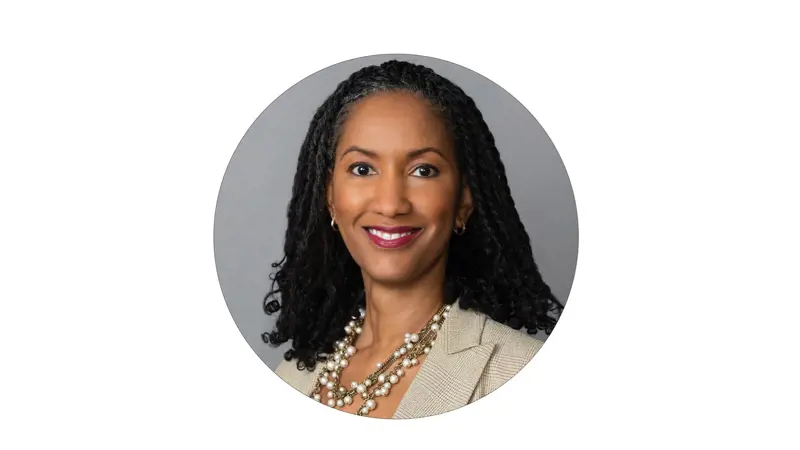
Dr. Hudson Berrey
Syria’s first Liberation Day, celebrated on December 8, 2025, included three ACS members as part of the event held in Idlib.
Michael Samotowka, MD, FACS, Adam Ackerman, MD, FACS, and I were in the region on a trauma training mission under the sponsorship of MedGlobal, an international humanitarian nongovernmental organization (NGO) that provides free, sustainable healthcare services to refugees, displaced persons, and other vulnerable communities in crisis areas and low-resource settings worldwide.
We are veterans of surgical trauma training in Ukraine and volunteered for this first-of-its-kind mission to Syria.
MedGlobal leadership, including Zaher Sahloul, MD, and its board of directors, have a history of supporting medical missions in northern Syria during the civil war, which began in 2012. Specifically, these missions worked within the internal displaced persons (IDP) camps in northern Syria which borders Türkiye. Following the fall of the Assad regime on December 8, 2024, a new government was established with control over all of Syria, and we were the first surgeons from the US for MedGlobal to participate in a medical surgical trauma teaching mission.
During their travel in Syria, Drs. Michael Samotowka, Hudson Berrey, and Adam Ackerman were supported by welcoming hosts (left and right).
Travel into Syria required navigating international connections, cash-only visa procedures, and security interviews upon arrival. After navigating these challenges, we were gratefully received by our Syrian hosts.
The team headed to Tartus, Syria, a coastal town located in the area held by the prior regime. The journey was a study in contrasts. Throughout the free Syria region, there was evidence of prior fighting, bombed-out buildings, empty power line structures, and IDP camps. Additionally, there were frequent checkpoints along the road, all with heavily armed but pleasant soldiers who waved us through.
Some of the trauma training was held at this clinical facility in Darkush, Syria.
Our surgical trauma training in Syria was based on the training that we do in Ukraine, with certain modifications. The 2-day course includes lectures and surgical training. Two diverse types of surgical training are provided to students—one for the orthopaedic/trauma surgeons and another directed at the general surgeons.
An ultrasound machine and a somewhat reluctant volunteer were made available to us. The students had virtually no experience with using ultrasound. The normal findings of an ultrasound exam were demonstrated followed by practice. With instructor guidance, the surgical trainees were able to get firsthand experience examining the heart, kidneys, liver, and bladder.
In Ukraine, pigs are used as anatomical models, which lends itself well to general surgery trauma training as the chest and abdomen are reasonably similar to humans. Unfortunately, pig models do not work for orthopaedics, which is Dr. Berrey’s specialty, so he developed a goat model that he uses in Ukraine.
This bombed-out village in Darkush is located near an old church in the free Syria region, showing evidence of prior fighting.
However, in Syria, because of the prohibition of pigs and pork, we used sheep models instead, but there are significant anatomical variations that make using sheep a challenge. Demonstrating different maneuvers and repairs of injuries to vital structures were the mainstays of instruction as well as demonstrating shunt techniques.
For the orthopaedic section, goat models were used featuring black ink to simulate a wound and damaged tissue. A lecture on goat anatomy showing the relevant anatomy of the model and how it differs from human anatomy was provided to learners as was a video demonstration depicting the proper method for debriding a wound made in a goat leg with the use of a “M-80” type of firecracker.
As firecrackers are not allowed in Ukraine, the modified wound with ink substitutes is a reasonable facsimile, except the ink can be smeared so it is a never-ending chase to get all the ink out. Ultimately, this training demonstrated the proper technique for debriding open wounds caused by blast or gunshot injuries.
Dr. Michael Samotowka and his students practice emergency surgical procedures using a goat model.
Additionally, a PowerPoint presentation, also using a goat model, was featured in the training to demonstrate the proper way to perform a fasciotomy for compartment syndrome releases in the leg, using two large incisions—medial and lateral.
Care was taken to demonstrate the adequate release, using the medial longitudinal incision, of the deep posterior compartment of the leg. Next, the release of both the anterior and lateral compartment on the lateral side was shown. With these two incisions made, we proceeded with demonstrating the use of the medial gastrocnemius flap for coverage of the proximal third of the tibia, a skill every orthopaedic surgeon should know.
Another PowerPoint presentation showed the anatomy of the goat leg, including the two heads of the gastrocnemius and the proximal interval between the medial and lateral heads through which the neurovascular bundle passes. This gap between the heads allowed identification of the raphe between the heads and then mobilization of the medical gastrocnemius was demonstrated.
Once the end of the muscle with 2 cm of Achilles tendon is mobilized, a tendon suture technique was shown. This step allowed the placement of the muscle to cover the exposed bone or neurovascular tissue. The fascia over the muscle was removed to demonstrate how to enlarge the muscle graft widthwise and to prepare for receipt of a split-thickness skin graft. Obtaining the skin graft was featured in the presentation, but not demonstrated in the class, due to the model’s tough skin and lack of a dermatome.
The concept of muscle flap coverage (gastrocnemius) for exposed open fractures is demonstrated.
One goat can serve to teach two students as the hind legs are used for the compartment release and muscle flaps. Other parts of the goat can be used for the debridement model.
On the afternoon of our second skills lab day, we packed up and traveled north, into the former area of the Free Syrian Army that opposed the Assad regime. We were in Darkush, a half kilometer from the Turkish border.
A hospital that is supported by MedGlobal as well as other NGOs, was to be our home for the next 3 days. We took over the hospital call room as our sleeping quarters, displacing the prior occupants who accepted their removal graciously. We had wonderful accommodations, comfortable beds, with tea or coffee provided by one of the staff. Breakfast—consisting of cucumbers, tomatoes, pomegranates, hummus, pita bread, and rolls—was brought to our room on a big tray and put on two bedside stands.
Our outline for teaching was the same as it was in Tartus, though the class size was smaller as we only had 2 days for teaching—one for lectures and one practical goat session.
Liberation Day
Three million Syrians occupied IDP camps in the free, non-Assad regime area of Syria during the civil war, of which one million have returned to their homes or what is left of them. Much of the power grid in Syria is supplied by Türkiye but water and sanitation systems are almost nonexistent in many areas. Destroyed homes and buildings are everywhere in the formerly liberated region of Syria.
At the site of the first training, Drs. Michael Samotowka, Hudson Berrey, and Adam Ackerman meet with students and staff from the hospital in Tartus, Syria.
On Liberation Day, we journeyed with our Syrian friends from Darkush to Idlib, a harrowing 2-hour drive over poorly marked roads and mountainous terrain in the fog. Idlib was the city where the final advance of the Free Syrian Army began its progression toward Damascus in order to free the entire country from the Assad regime.
Upon arrival in Idlib, we found massive traffic jams, car horns blaring, and people walking, smiling, cheering, and waving flags. Our team made it to the city center on foot where a huge crowd gathered, with spotlights lighting up the air and bands playing. Being recognized as Americans, we had many Syrians come up and want their picture taken with us.
As the hour was getting late, we managed to find our minibus and took the same road home. We felt lucky to witness such a historic celebration and serve as unofficial ambassadors of our country.
Our last day was an early one, leaving Darkush and our new colleagues for the long drive over the mountains and then on to Aleppo. In the light of day, scenes of combat damage were evident along our route to the airport. However, there also were optimistic signs of a new future, such as the sites of IDP camps that were empty as people made their way back home, and scenes of new construction and farming, goat and sheep herding, and well-tended groves of olive and pistachio trees.
Disclaimer
The thoughts and opinions expressed in this column are solely those of the authors and do not necessarily reflect those of the ACS.
Dr. Hudson Berrey is a semi-retired professor of orthopaedic surgery from the University of Florida in Gainesville and Jacksonville. He spent 25 years on active duty in the US Army, retiring as chief of orthopaedic surgery at Walter Reed Army Medical Center in Bethesda, MD, and served as the orthopaedic consultant to the US Army Surgeon General.