Become a member and receive career-enhancing benefits
Our top priority is providing value to members. Your Member Services team is here to ensure you maximize your ACS member benefits, participate in College activities, and engage with your ACS colleagues. It's all here.
Become a member and receive career-enhancing benefits
Our top priority is providing value to members. Your Member Services team is here to ensure you maximize your ACS member benefits, participate in College activities, and engage with your ACS colleagues. It's all here.
If You’re Not Falling, You’re Not Learning: Margo Shoup’s Story
Tyler G. Hughes, MD, FACS
September 10, 2025
7 MinPrintShare
Bookmark
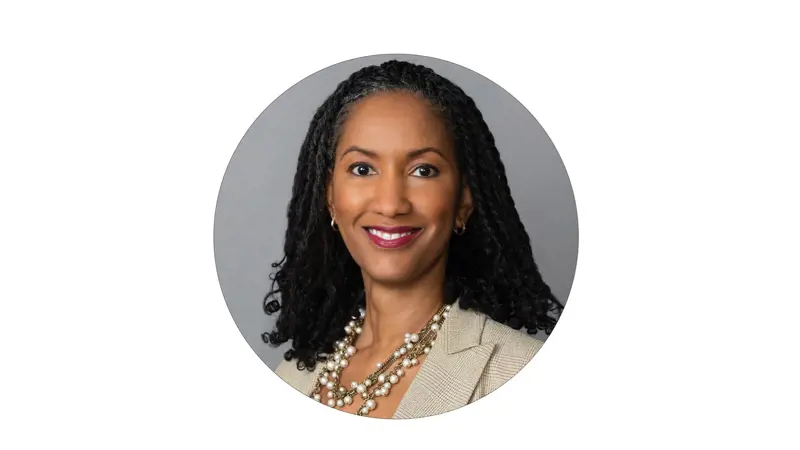
Dr. Margo Shoup
Note from Dr. Hughes: Talking about the “average” surgeon is like referring to an “average” astronaut. Every story is unique; there is no average. In this article series, I will feature surgeons of different specialties, backgrounds, ages, and practice types. Some of the surgeons you may know well, while others have worked in near obscurity. As surgeons, they serve all with skill and trust. If you are an ACS member and would like to meet with me to share your experiences, contact bulletin@facs.org.
Tenley Albright, MD, was the first US woman to win an Olympic gold medal in figure skating in 1956. After her skating career, this spectacular individual went on to study medicine at Harvard University in Cambridge, Massachusetts, specializing in orthopaedic surgery before joining the faculty there. She never lost her love of skating and often went to the local rink in Boston with her children. During those visits, she met a little girl who was approximately 11 years of age. Dr. Albright’s kind attitude and marked intellectual achievements would inspire the girl in ways beyond athletics.
That little girl got up at 4:30 am every morning to practice her figures and skating. She learned focus, determination, and persistence. She did this for years. She also would eventually become a surgeon, and Dr. Albright was one of her inspirations both in skating and medicine.
In the subsequent years, this petite and fiercely competitive young woman would grow into a world class skater and, like her role model, become a famous surgeon who has changed the lives of patients, fellow surgeons, and health systems.
Margo Shoup, MD, MBA, FACS, is another example of an ACS Fellow quietly making the world a better place.
Dr. Shoup always is driven to “get better” in whatever she pursues. She left her home in Indianapolis at age 16 to train at the Olympic Skating Center in Colorado Springs. After a successful skating career, Dr. Shoup, like Dr. Albright, felt there were new goals to conquer, and so she decided to go to medical school.
Her first clinical rotation in medical school was surgery, and during that experience, she scrubbed in as an observer on a heart transplant. There is a moment in such transplants when the patient is literally alive without a beating heart. Seeing that empty chest cavity in a living patient was a moment the young medical student would never forget, resulting in her pursuit of a surgical career. Dr. Shoup said that even now, decades later, she tingles when thinking of that moment.
She had planned on becoming an orthopaedic surgeon like her hero Dr. Albright, but it was surgical oncology where she ultimately found her true passion. Orthopaedics now seemed too confined without the application of physiology and basic science that she loved. General surgery satisfied her but was too episodic; oncology allowed her to fuse her love of challenging surgery, physiology, and long-term relationships with patients.
Dr. Margo Shoup bungee jumps in New Zealand.
Dr. Shoup completed her fellowship at Memorial Sloan Kettering Cancer Center in New York City, which led her to an academic post in Chicago. She eventually was recruited to a community practice in Chicago where she dedicated herself to providing seamless oncologic care and led a very successful program. She took her approach to oncologic care to Connecticut and Florida and now lives and works near Tacoma, Washington, running a cancer program that covers the state of Washington.
During these years of community practice, Dr. Shoup was president of the Chicago Surgical Society, Midwest Surgical Association, Central Surgical Association, and Western Surgical Association; she also was vice president of the Society of Surgical Oncology and a director of the American Board of Surgery (ABS).
I’ve known Dr. Shoup for several years stemming from her time on the ABS. Two moments that stand out for me are her bungee jump from a bridge in New Zealand and her jumping off a 30-foot rock cliff into the Caribbean.
The woman is fearless.
However, one should remember she routinely was flying through the air over rock-hard ice from the time she was 8 or 9 years old until her early 20s. Like every skater, no matter how accomplished they become, she knew the pain of falling on the ice. Similarly, in her surgical practice, each leap is a calculated risk balancing risk versus reward based on knowledge, training, and practice. So, Margo Shoup knew the joy of flying and the pain of crashing, yet she persisted on the ice and in her surgical training. She will tell you, “If you are not falling, you’re not learning.”
Over her career of some 30 years, Dr. Shoup moved gradually from the operating room to the C-suite because she wanted to bring physician input to health systems management and, as she would say, “make being a surgeon fun again.” Her goal was to combine superb personal care to patients while at the same time making that care a joyful and rewarding experience for the healthcare team at all levels.
Dr. Shoup’s life has not been without its searing moments of pain. She herself is a cancer survivor, and her daughter, Erica, was diagnosed with leukemia at 18 years old, spending 4 years in intense treatment and living with the ongoing angst of whether she would survive.
A young Margo Shoup showcases her grace and determination during her competitive figure skating years—qualities she later brought to the surgical field.
Erica did survive, and the experience reset Margo’s outlook. She said that before that time she ascribed to the generally accepted premise that it was important to go to the right schools, find the best job, work hard, and then happiness would follow. Now, she says that’s backward. Doing what you love because you love it will lead you to all those right places, people, schools, and opportunities that result in meaning, purpose, and fulfillment.
In the aftermath of the cancer battles, the family has renewed energy to enjoy each moment and experience. They fly and sometimes fall, realizing that it is all part of a full life.
Dr. Shoup still gets up every day at 4:30 am and goes to work preparing to soar but knowing that falls are part of the work that makes her a better surgeon and person. She often still thinks of Dr. Albright, who is now 89 years old.
Margo Shoup keeps flying while uplifting all those she serves with skill and trust.
Read “The Nearly Headless Patient,” another installment in Dr. Hughes’s series, “A Surgeon’s Tale,” published in the April 2025 issue of the ACS Bulletin.
Disclaimer
The thoughts and opinions expressed in this article are solely those of the author and do not necessarily reflect those of the ACS.
Dr. Tyler Hughes is a retired Kansas rural surgeon. Born in Texas, he trained in Dallas but spent most of his career working as a surgeon in McPherson, Kansas. In retirement, Dr. Hughes is traveling the world in search of surgeon stories.