Unsupported Browser
The American College of Surgeons website is not compatible with Internet Explorer 11, IE 11. For the best experience please update your browser.
Menu
Become a member and receive career-enhancing benefits

Our top priority is providing value to members. Your Member Services team is here to ensure you maximize your ACS member benefits, participate in College activities, and engage with your ACS colleagues. It's all here.

Become a Member
Become a member and receive career-enhancing benefits

Our top priority is providing value to members. Your Member Services team is here to ensure you maximize your ACS member benefits, participate in College activities, and engage with your ACS colleagues. It's all here.

Become a Member
ACS
News

ACS Awards Three Surgical Adhesions Improvement Grants

September 10, 2025

The first grantees from the ACS Surgical Adhesions Improvement Project have been announced.

Private philanthropists Peter and Marshia Carlino, whose involvement with surgical adhesions is motivated by the experience of their son with intraperitoneal adhesive disease, sponsored the awards, in addition to funding a summit in September 2024 in Washington, DC, that gathered approximately 100 surgical adhesion experts from around the world.

Three grantees will receive awards of $100,000 each over 2 years to study the biology of adhesive disease and/or the development of medical products that may prevent or heal adhesions in the abdomen or pelvis. The ACS Surgical Research Committee chose the winning grant applications via a process adhering to National Institutes of Health guidelines, without the input of Surgical Adhesions Improvement Project organizers.

25septbulwebacs-adhesionsweb-1960x1080.jpg

Dr. Michael Longaker

Michael T. Longaker, MD, MBA, FACS

Awardee Michael T. Longaker, MD, MBA, FACS, is the Deane P. and Louise Mitchell Professor in the School of Medicine and a professor, by courtesy, of materials science and engineering at Stanford University in Palo Alto, California. A pediatric craniofacial surgeon whose research career has focused on wound repair and fibrosis, he also was the winner of the inaugural ACS Jacobson Promising Investigator Award in 2005.

His grant-funded project will focus on assessing the use of T-5224-hydrogel therapy for the prevention of abdominal adhesions. The approach builds on Dr. Longaker’s previous research into the role of JUN, a transcription factor known to regulate adhesion-forming fibroblasts. Dr. Longaker has established, via a porcine model, that the small molecule inhibitor T-5224 can suppress JUN signaling in small bowel anastomotic healing. The current grant project will examine its use in the context of colon resection, intra-abdominal cancer, and repeated abdominal surgery.

Deshka Foster, MD, PhD, an assistant professor of general surgery at Stanford University who earned her doctorate in cancer biology in Dr. Longaker’s laboratory, will participate in the research. Dr. Foster also was part of the Surgical Adhesions Improvement Project Summit in September 2024.

25septbulwebacs-adhesionsweb-2960x1080.jpg

Dr. Nicole Wilson

Nicole A. Wilson, PhD, MD, FACS

A second project will build upon existing evidence from murine studies demonstrating the relevance of a small calcium-binding protein, S100A4, to adhesion formation. Researcher Nicole A. Wilson, PhD, MD, FACS, who is an associate professor of surgery and director of the Engineering & Clinical Laboratory for Innovation in Pediatric Surgery at The University of Oklahoma Health Campus in Oklahoma City, will use her grant to create a rabbit model of abdominal adhesion formation. She will then comprehensively examine this model via integrated single-cell sequencing and spatial transcriptomics, which will help to establish the types, locations, and interactions of gene expression within the adhesion tissue. Dr. Wilson will examine whether S100A4 inhibition makes meaningful improvement in adhesions via treatment with the S100A4 inhibitor Niclosamide, a drug presently mostly used to treat certain tapeworm infestations.

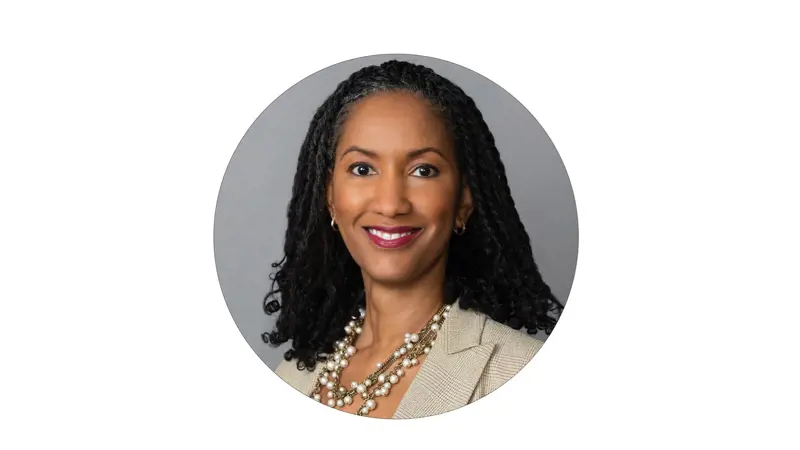
25septbulwebacs-adhesionsweb-3960x1080.jpg

Dr. Samuel Carmichael II

Samuel P. Carmichael II, MD, PhD, FACS

The final grantee is Samuel P. Carmichael II, MD, PhD, FACS, an assistant professor in the Department of Surgery at the Wake Forest School of Medicine in Winston-Salem, North Carolina. Dr. Carmichael conducts basic and translational research at the Wake Forest Institute for Regenerative Medicine and is co-chair of the Surgical Consortium on Adhesions Research (SCAR) Advisory Group, which helps to lead the Surgical Adhesions Improvement Project. His grant-funded project will aim to enhance understanding of the thromboinflammatory environment of the peritoneal cavity. He will focus on comprehensively characterizing the environment that promotes fibrosis in the abdomen following surgical injury to tissue, moving from an established rat model to a clinical one. The project also will identify new targets for drugs in a clinical population.

Via the SCAR Advisory Group, the Surgical Adhesions Improvement Project also has undertaken other research studies. These include reviews of tools for intraoperative assessment of adhesions, patient-reported outcomes measures, available prophylaxis for adhesive small bowel obstruction, and the development of new technologies relevant to adhesive disease.

Dr. Carmichael expressed his gratitude for the philanthropists who have made this possible: “None of this would have been possible without the Carlino family. I certainly can’t say that enough. I call it ‘fuel for the mission,’ which, absolutely, over and over again, bears being repeated and being remembered.”

For more information about the Surgical Adhesions Improvement Project and surgical adhesions research, read “Surgical Adhesions Improvement Project Advances Disease Science” in the June 2025 issue of the ACS Bulletin.